Flagship feature
The Build: 873 EUT
By Jon Cosson — classic-car owner, North Yorkshire, near Thornton-le-Dale
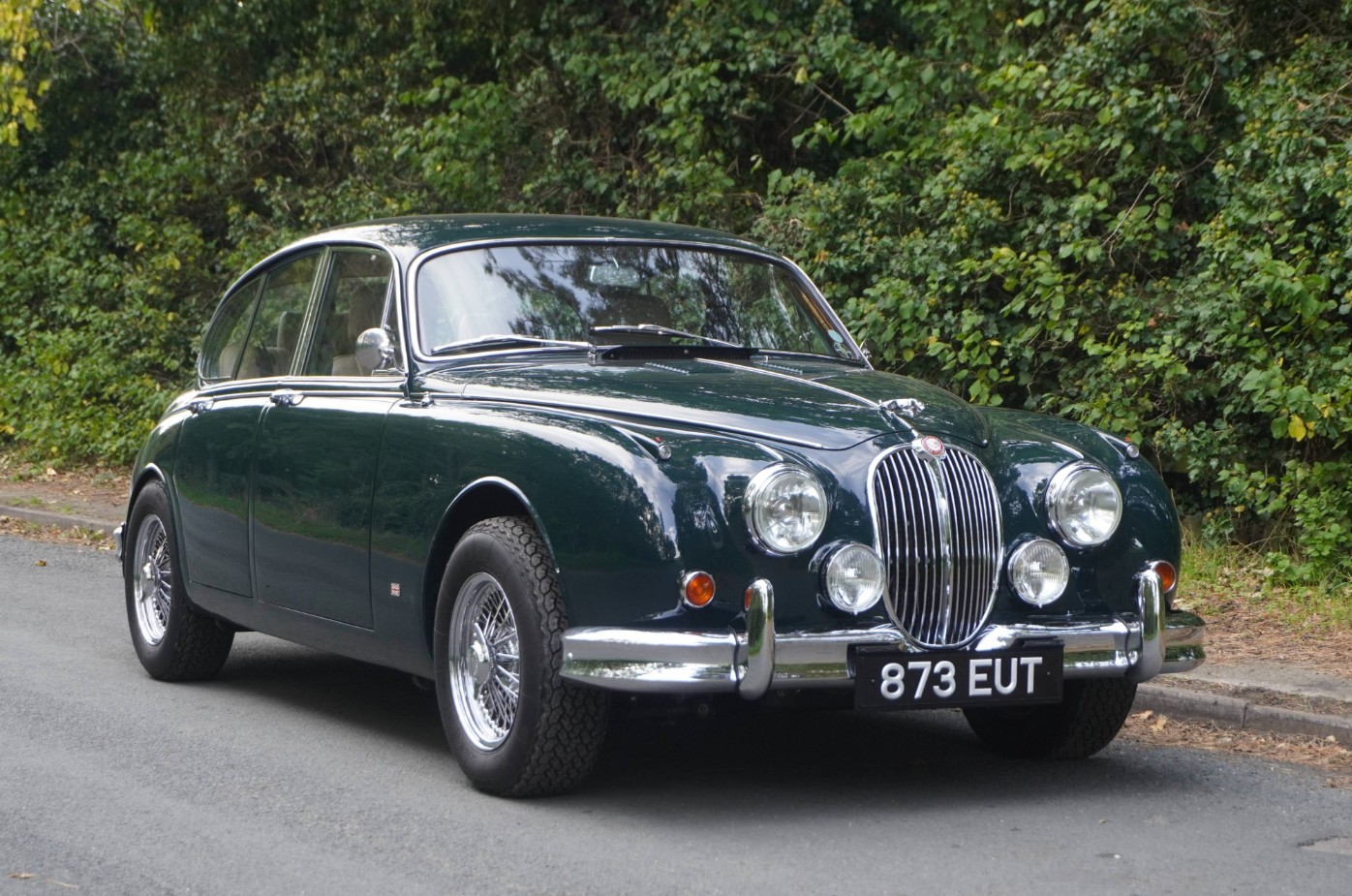
873 EUT began as a genuine 3.8 Mk2, and that matters. Restomods built on lesser cars always carry an asterisk; this one started with the right engine and the right shell, then spent six years apart while a respected Jaguar specialist rebuilt it from bare metal outwards. The brief was not to make it faster than a Mk2 ought to be. It was to make it drive the way people remember Mk2s driving — which, honestly, they never quite did.
The result reads as a period-correct saloon on Coombs-style flared arches, and drives like something rather more modern. Cruise it at motorway speed on the fifth gear the factory never fitted, and the difference is not the extra pace but the absence of drama: the engine is quiet, the steering weights up as the speed rises, and the brakes stop repeatedly without the long, thoughtful pause a standard Mk2 gives you.
Specification
Everything below describes this specific car as built. Treat it as one owner's set of decisions rather than a recommended parts list — several choices only make sense together.
- Starting point
- A genuine 3.8-litre Mk2
- Six-year bare-shell rebuild by a respected Jaguar specialist
- Around 3,000 miles covered since the rebuild was completed
- Engine
- Rebored 3.8 XK six
- 8:1 compression County pistons
- Straight-port E-Type cylinder head and E-Type camshafts
- Six-branch tubular exhaust manifold
- Transmission
- Getrag five-speed gearbox
- Rear axle
- Salisbury limited-slip differential
- 3.54:1 final drive ratio
- Brakes
- Vented front discs with four-pot calipers
- V12 E-Type master cylinder
- Servo assistance
- Steering
- Speed-sensitive power steering
- Suspension
- Uprated competition-style springs
- Adjustable Gaz dampers
- Polyurethane bushes throughout
- Electrics & cooling
- Modern fused rewire
- LED lighting
- 14-inch electric cooling fan
- Interior
- XJ6 electric front seats
- Body & wheels
- Coombs-style flared rear wheelarches
- 6.5-inch wire wheels
Why these choices work together
The straight-port E-Type head and cams are the heart of it, but they only breathe properly because of the six-branch manifold, and the 8:1 County pistons keep the whole thing happy on modern pump fuel rather than demanding a leaded diet. The Getrag five-speed and the 3.54 Salisbury limited-slip axle then convert that flexibility into usable range: low enough gearing to pull cleanly out of a village, tall enough top gear to sit at a legal motorway cruise without the engine working.
The chassis side follows the same logic. Vented four-pot front discs, a V12 E-Type master cylinder and a servo give the pedal the authority the extra performance needs; the competition-style springs, adjustable Gaz dampers and polyurethane bushes remove the roll and vagueness that made a standard car feel nervous. Speed-sensitive power steering is the quiet hero — light for parking, properly weighted at speed. The fused rewire, LED lighting and 14-inch electric fan address the two things that most often strand a Mk2: wiring and cooling.
What it gives up, and what it gains
A restomod of this kind is a set of trades, and it is worth being honest about them. The car is no longer originally specified: the head, the gearbox, the axle ratio, the brakes, the steering and the loom are all departures from what left Browns Lane. For a concours judge that is the end of the conversation, and anyone buying with an eye on matching-numbers value should read what drives Mk2 values before committing to work like this.
What it gains is usability. The changes on this car all attack the same three complaints owners make about standard Mk2s: it is busy and thirsty at motorway speed, the brakes fade when asked twice, and the electrics and cooling are the usual reasons a journey ends early. Fifth gear, the four-pot front discs and the rewire-plus-electric-fan combination answer those directly, which is why they are the first three articles most people arrive at in the upgrade guides.
None of it makes the car quick by modern standards, and it was never meant to. It makes a 1960s saloon something you can use on a Tuesday without planning the route around it.
Planning similar work? Start with the upgrade guides.