Upgrade guide
Engine Tuning & Power
By Jon Cosson — classic-car owner, North Yorkshire, near Thornton-le-Dale
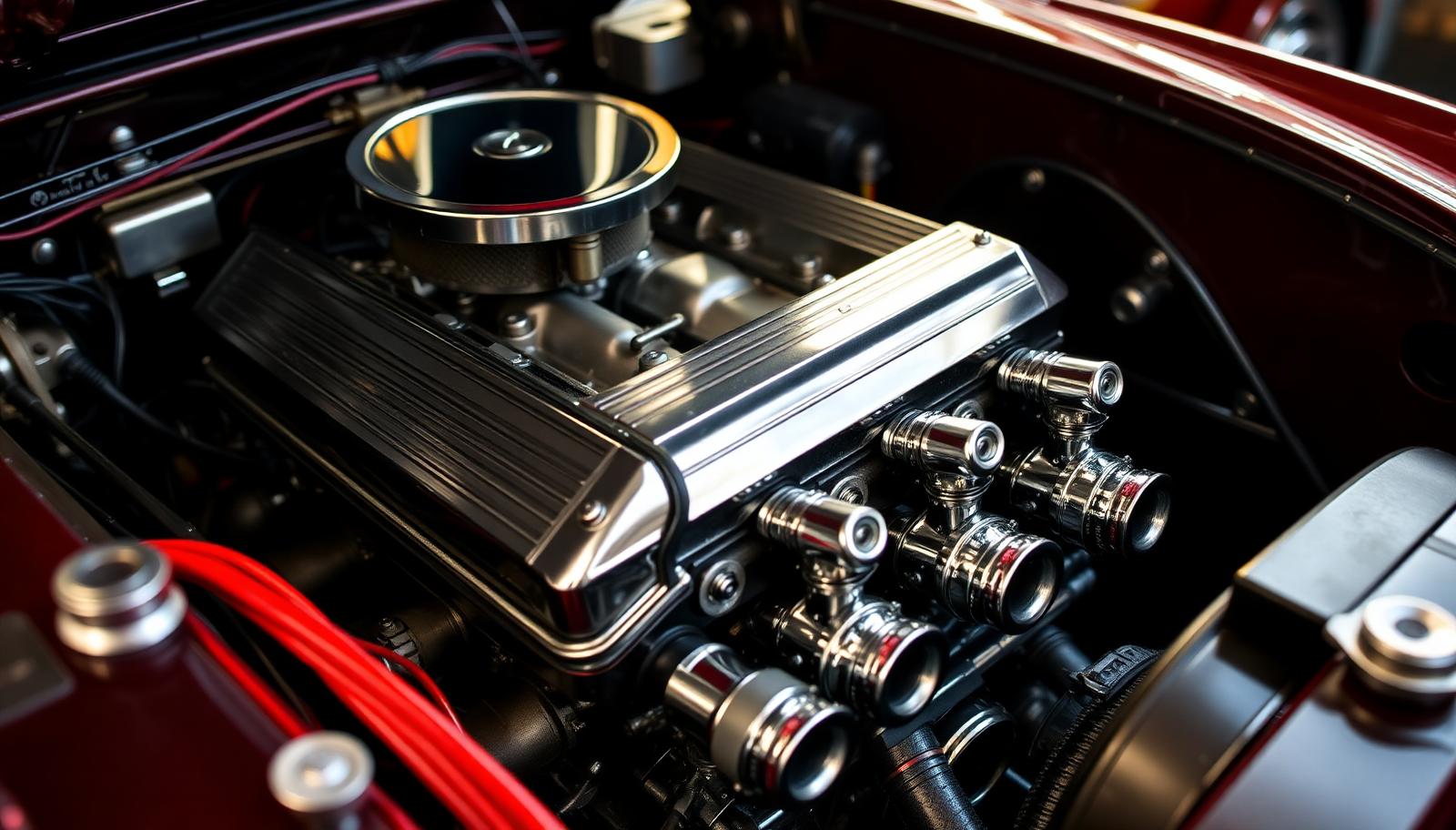
The Mk2's XK straight-six is the same magnificent engine that powered the E-type — but in the saloon it was deliberately detuned. Understanding why is the key to unlocking real, reliable extra power.
Why the Mk2 makes less than the E-type
The 3.8 Mk2 shares its block, crank, rods and pistons with the 3.8 E-type, yet makes around 30bhp less. The reason is the top end: the Mk2 uses a curved-port cylinder head and twin SU carburettors, where the E-type has a straight-port head and triple carbs. The straight-port head breathes better at the top end; the curved-port head gives a slightly broader torque spread.
The classic tuning recipe
The well-trodden fast-road path essentially converts the engine to E-type breathing:
- A straight-port cylinder head (from an E-type, Mk X or 420G), often gas-flowed, with larger valves.
- Triple SU carburettors (HD8s), or twin HD8s, in place of the standard twin HD6s.
- High-lift camshafts and uprated valve springs.
- A six-branch tubular exhaust manifold ("extractors") and a free-flowing exhaust.
- Sometimes a raised compression ratio (a high-compression head was a factory option in period), balanced against modern fuel.
Done together, these turn a 220bhp Mk2 into something with genuine E-type urge.
Bigger still: the 4.2
Some builders fit a 4.2 XK (from a later XJ6 or E-type) for more torque again; the engines are relatively plentiful. A bigger job, but well known.
Keep it balanced
More power deserves the brakes, suspension, cooling and transmission to match — which is why engine work usually comes as part of a wider fast-road build. See the brake upgrades guide and the cooling & electric fans guide.
On our car
873 EUT runs a rebored 3.8 with 8:1 County pistons, a straight-port E-type head and cams, and a six-branch manifold — the classic recipe. The full specification is in The Build: 873 EUT.
Common questions
- Why does a Mk2 3.8 make less power than an E-type?
- They share the block, crank, rods and pistons, but the Mk2 has a curved-port head and twin carburettors while the E-type has a straight-port head and triple carbs, so the Mk2 makes around 30bhp less.
- How do you get more power from a Jaguar Mk2?
- The classic route fits a straight-port E-type-style head, triple SU carburettors, high-lift cams and a six-branch exhaust manifold — essentially E-type breathing — for a big, reliable gain.
- What carburettors should a tuned Mk2 have?
- Standard cars have twin SU HD6s; tuned cars typically use twin HD8s or triple SU carburettors, as fitted to the E-type and Mk X.
- Is fitting a 4.2 engine worth it?
- A 4.2 XK brings more torque and the engines are relatively easy to find; it is a bigger swap but a well-proven one for owners wanting effortless performance.