Knowledge base
The XK Engine Explained
By Jon Cosson — classic-car owner, North Yorkshire, near Thornton-le-Dale
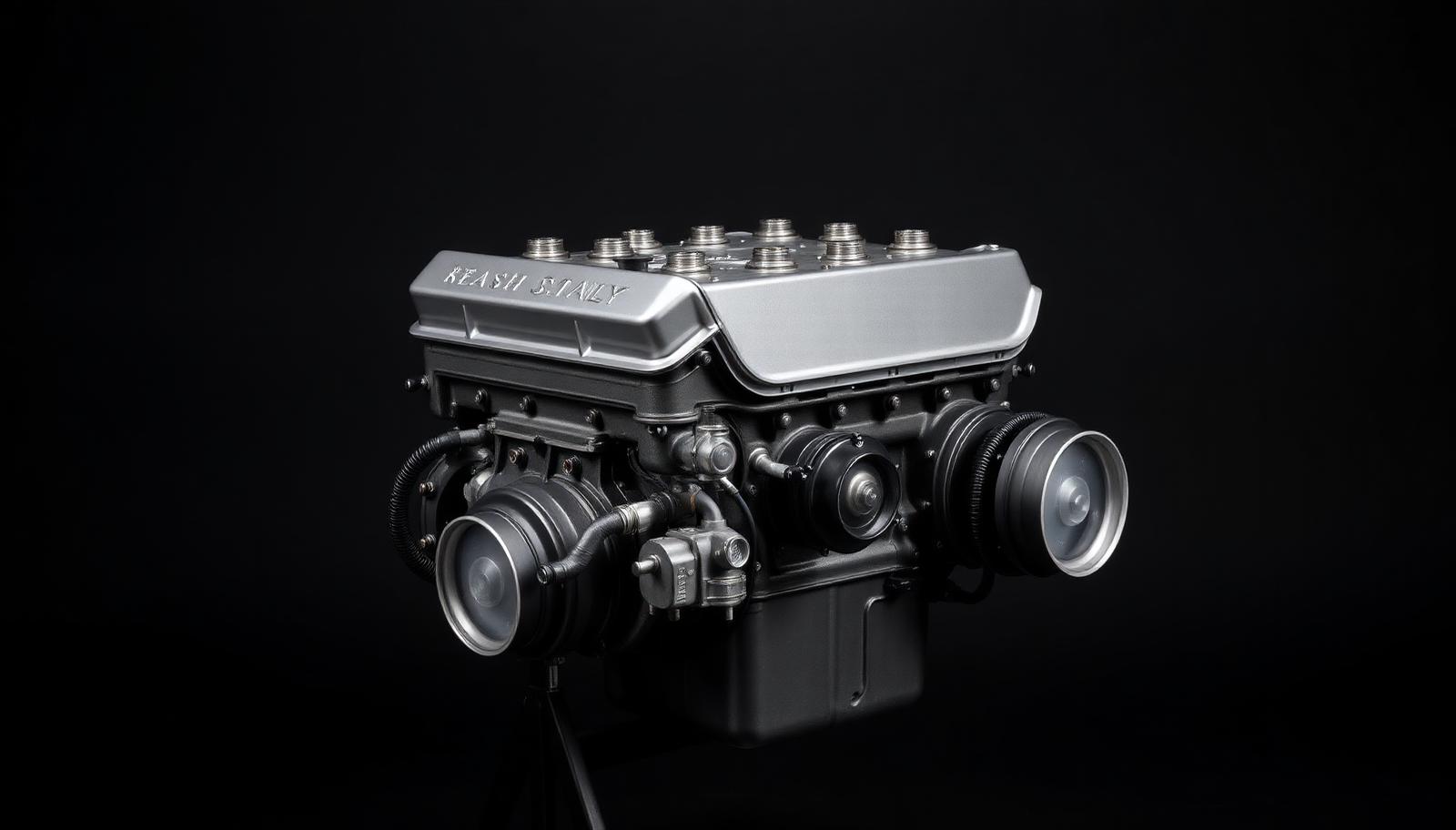
At the heart of every Mk2 is one of history's great engines: the Jaguar XK straight-six. Understanding it explains both the car's character and its huge tuning potential.
A twin-cam of Le Mans pedigree
Introduced in 1949, the XK is a double-overhead-camshaft, hemispherical-head straight-six — advanced, beautiful and famously effective. It won Le Mans in the C-type and D-type and powered everything from the XK120 to the E-type and the Mk2.
The Mk2's three sizes
The Mk2 used the XK in three capacities: the 2.4 (120bhp, twin Solex carbs), the 3.4 (210bhp) and the 3.8 (220bhp), the latter two on twin SU carburettors. The 3.8 shares its block, crank, rods and pistons with the 3.8 E-type — the difference is the head and carburation, as explored in the engine tuning guide.
How it is built
An iron block with an aluminium-alloy cylinder head, the valves opened by twin chain-driven overhead camshafts (via twin duplex chains, whose lower tensioner Jaguar improved from a spring type to a hydraulic one). The alloy head means the coolant must always carry a proper corrosion inhibitor.
Tough, tunable and long-lived
The XK is famously durable and stayed in production into the 1990s. It responds superbly to tuning — heads, cams and carburettors — which is why the fast-road Mk2 exists. Its main ownership watch-points are oil pressure and cooling in modern traffic.
Common questions
- What engine does the Jaguar Mk2 have?
- The Jaguar XK: a twin-overhead-cam straight-six of Le Mans fame, in 2.4, 3.4 or 3.8-litre form in the Mk2.
- Is the Mk2 3.8 engine the same as the E-type's?
- Largely — the 3.8 Mk2 shares its block, crank, rods and pistons with the 3.8 E-type, differing mainly in the cylinder head and carburation, which is why it makes a little less power.
- Why is the XK engine so good for tuning?
- Its twin-cam, hemi-head design breathes well and responds strongly to head, cam and carburettor changes, so big, reliable power gains are well understood.
- What are the XK engine's weak points?
- It is very tough, but watch oil pressure and cooling in modern traffic, and always run coolant with a corrosion inhibitor because of the aluminium cylinder head.